Backyard Privacy Landscaping Design Approach Guide
Discover the ultimate backyard privacy landscaping design approach. Transform your yard into a secluded retreat with effective strategies!
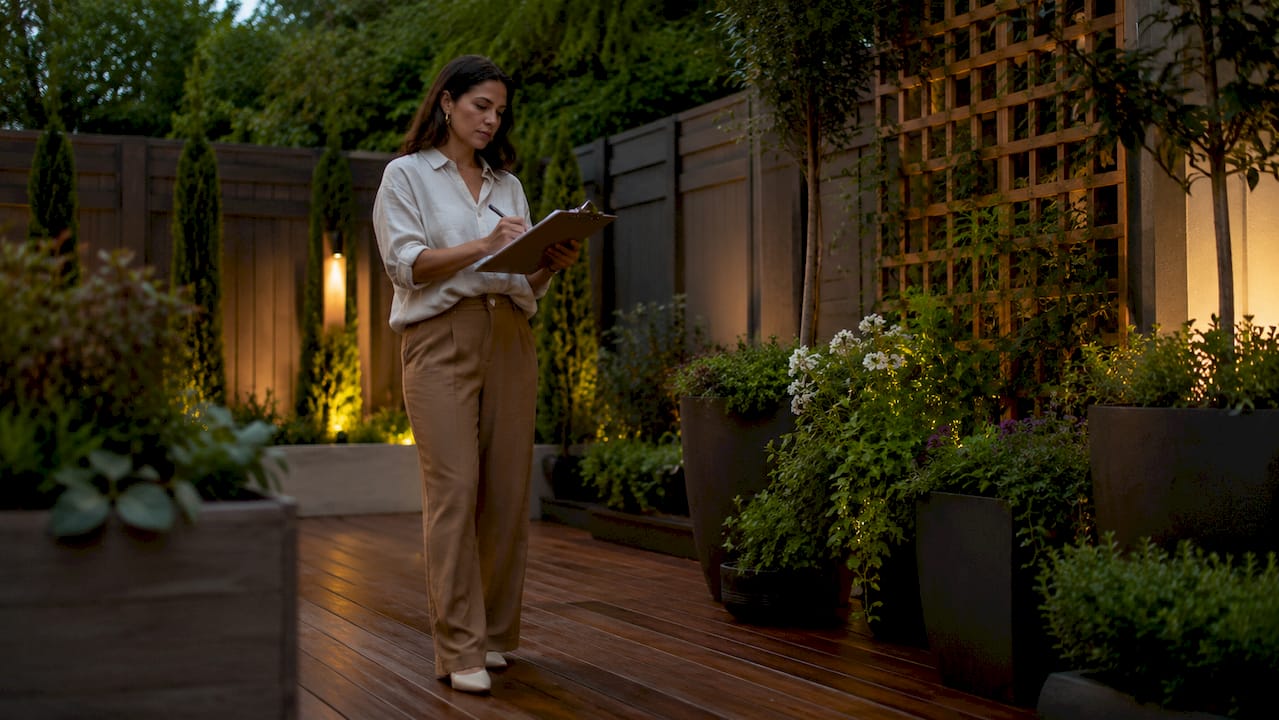
Backyard privacy landscaping is the intentional use of structural elements and living plant screens to block sightlines, create seclusion, and transform an exposed yard into a private outdoor retreat. The most effective backyard privacy landscaping design approach combines architectural features like pergolas and fences with layered plantings of arborvitae, bamboo, or Italian cypress to deliver both immediate coverage and long-term natural screening. Municipal regulations in most Rayne jurisdictions cap fence heights at 6–8 feet in backyards, with lattice toppers adding 2–4 feet, which means structural solutions alone rarely complete the picture. A well-executed privacy plan accounts for your specific use zones, local code constraints, and the visual character of your property.
What are the primary backyard privacy solution types?
The three primary categories of privacy solutions are structural elements, living screens, and hybrid combinations. Each serves a different timeline, budget range, and aesthetic goal. Understanding which category fits your situation is the first decision in any privacy design.
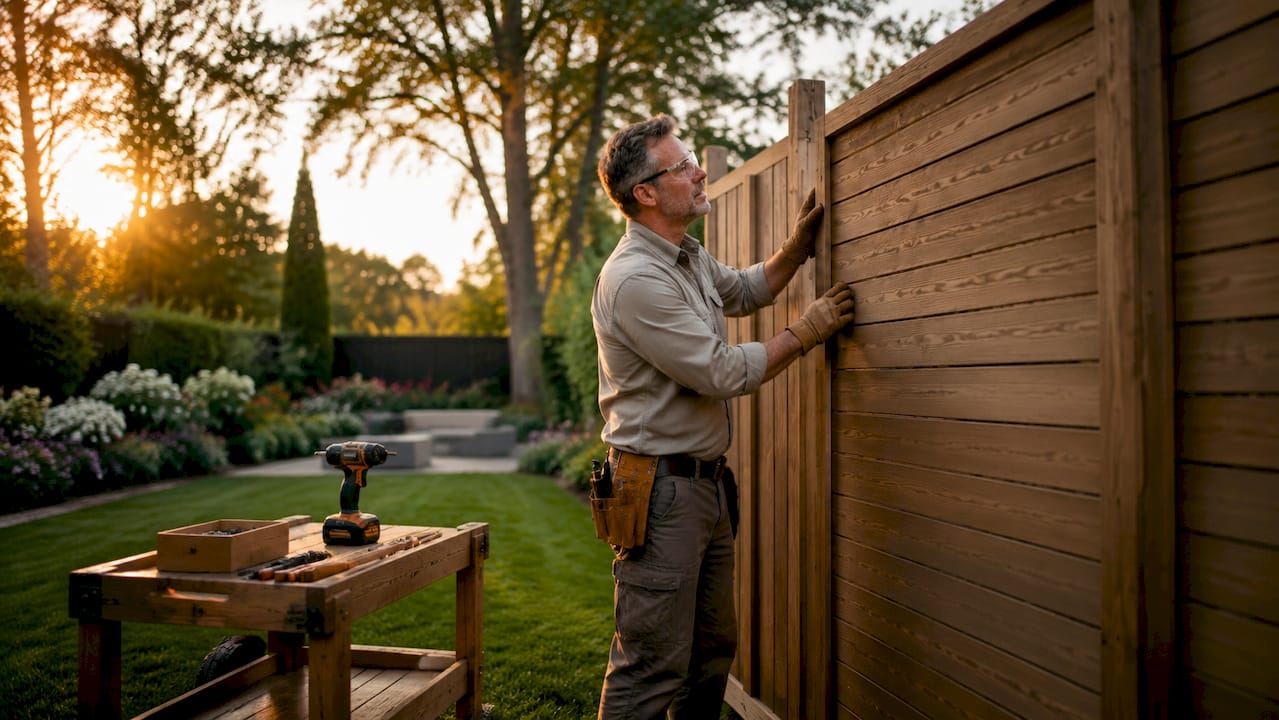
Structural solutions include fences, trellises, pergolas, and freestanding privacy panels. They deliver immediate coverage the day they are installed. Freestanding privacy panels cost $50–$300, while mounted screens on decks or patios run $100–$500 per section. The trade-off is that structures can feel hard and architectural without softening plant material alongside them.
Living screens rely on trees, shrubs, and ornamental grasses planted in deliberate layers. Species like Emerald Green arborvitae, Podocarpus, Ficus nitida, and clumping bamboo are common choices for Rayne's climate. Living screens take 2–5 years to reach full density, but they provide a natural, resort-caliber appearance that no fence can replicate.
Hybrid designs combine both categories for the most resilient and visually refined result. A hybrid privacy approach delivers immediate structural coverage while living screens mature behind and around it, creating layered depth over time. This is the approach Abshire Brothers Lawn & Landscape recommends for luxury properties where both function and aesthetics are non-negotiable.
| Solution Type | Privacy Timeline | Approximate Cost Range | Key Advantage | Key Limitation |
|---|---|---|---|---|
| Structural panels or fences | Immediate | $50–$500 per section | Instant coverage | Can feel stark without planting |
| Living screens (trees/shrubs) | 2–5 years | Varies by species and quantity | Natural, resort aesthetic | Slow to reach full density |
| Pergola with climbing plants | 1–3 years | $8,000–$40,000+ installed | Overhead and vertical coverage | Requires maintenance of plants |
| Hybrid structural and living | Immediate + maturing | Project-dependent | Best of both worlds | Requires coordinated design |
How to design privacy landscaping around your use zones and sightlines
Privacy is not a perimeter problem. Privacy design works best when it targets the exact sightlines that affect you at the height and location where you actually use your yard. A blanket screen around the entire property wastes resources and often misses the views that matter most.
The correct sequence for analyzing your backyard is:
- Sit or stand at each activity zone. Sit at your patio table, stand at the pool edge, and recline on a lounge chair. Each position creates a different sightline exposure. Privacy screens should block views at use height, which is approximately 3–4 feet for seated areas and 5–6 feet for standing zones.
- Identify the source of each unwanted view. Note whether the exposure comes from a neighbor's ground-level yard, a second-story window, or an elevated deck. Each source requires a different solution height and plant type.
- Map vertical sightlines separately. Second-story views are the most commonly overlooked privacy gap. Vertical privacy challenges from elevated neighbor windows are best addressed with canopy-level trees like Italian cypress or Podocarpus, or with a louvered pergola that provides overhead coverage.
- Mark only the gaps that matter. You do not need to screen every inch of your fence line. Strategic sightline interruption costs less and delivers more meaningful privacy than full-perimeter screening.
- Sketch the screen placement at the correct height for each zone. A 6-foot fence solves a standing-level view from a neighbor's yard. A 20-foot Italian cypress solves a second-story window. A louvered pergola solves an overhead drone or elevated deck view.
Pro Tip: Before ordering a single plant or panel, walk your yard at dusk when neighbors' lights are on. This reveals the exact sightlines that feel most exposed and lets you prioritize your investment precisely.
Step-by-step approach to planting and installing privacy elements
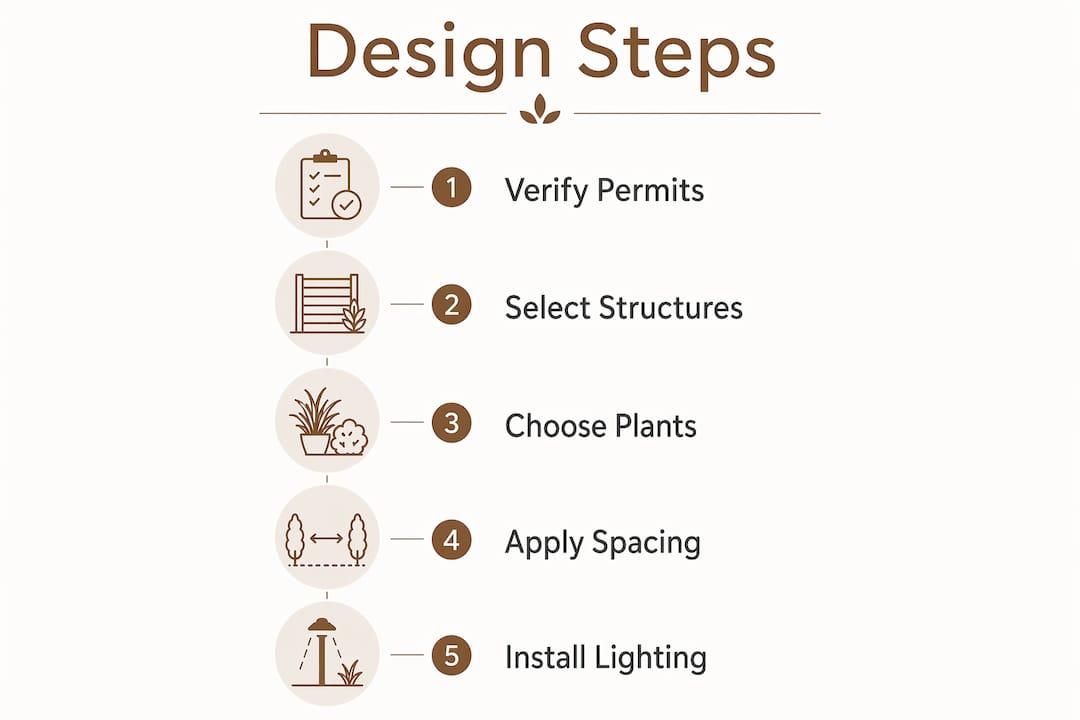
A well-sequenced installation prevents the most common and costly mistakes in privacy landscaping. The steps below apply whether you are adding a single living screen or executing a full hybrid design across a luxury Rayne property.
Step 1: Verify local regulations and permits
Check your municipality's fence height limits before purchasing any materials. Most Rayne jurisdictions allow 6–8 feet in backyards, with lattice additions extending coverage by 2–4 feet. Pergolas and overhead structures may require separate permits depending on size and attachment to the home. Abshire Brothers Lawn & Landscape manages all permitting in-house as part of the design-build process, which eliminates delays caused by incomplete applications.
Step 2: Select structural elements first
Choose your fence, trellis, or pergola before selecting plants. Structural elements define the framework that living screens will grow around and through. A custom louvered pergola solves both overhead and lateral privacy while extending your usable outdoor living space year-round. In Rayne's climate, a pergola with automated louvered slats functions as a permanent architectural room, not a seasonal shade structure.
Step 3: Choose privacy plants based on mature size and growth rate
Select species by their mature height, spread, and growth rate rather than their nursery size. The goal is to know exactly what the plant will look like in 5 and 10 years, not just at installation. For Rayne conditions, strong performers include:
- Italian cypress (Cupressus sempervirens): grows 40–70 feet tall, 3–4 feet wide. Ideal for narrow vertical screens.
- Podocarpus gracilior (fern pine): grows 30–40 feet, responds well to shaping. Excellent for formal hedges.
- Ficus nitida (Indian laurel fig): fast-growing, dense canopy. Common in Abbeville and Broussard privacy screens.
- Clumping bamboo (Bambusa species): reaches 20–35 feet, non-invasive. Adds a tropical character to modern yards.
- Emerald Green arborvitae: grows 10–15 feet, 3–4 feet wide. Works well as a mid-layer filler.
Step 4: Apply correct spacing for dense, healthy coverage
Spacing trees at 60–75% of their mature width produces dense, healthy screens that close gaps within 2–3 years. Planting too close causes root competition and long-term thinning. Planting too far apart leaves permanent gaps. For a species with a 6-foot mature spread, spacing plants 4–4.5 feet apart on center is the correct calculation.
Layer your planting in three height zones for a natural, resort-caliber effect. Effective layering uses tall backdrop plants at 15–30+ feet, mid-level shrubs at 6–15 feet, and low foreground plants at 2–6 feet. This three-zone structure creates visual depth and eliminates the flat, fence-like appearance of single-row planting.
Pro Tip: Integrate architectural landscape lighting into your privacy planting from day one. Uplighting tall trees and washing light across a living screen at night creates a dramatic visual boundary that actually increases your sense of seclusion after dark. Elegant Outdoor Lights offers [landscape lighting design](https://elegantoutdoorlights.com/landscape-lighting) that pairs directly with privacy planting plans.
What are the most common privacy landscaping mistakes?
The most costly mistakes in privacy landscaping fall into four categories, and each one is preventable with proper planning.
- Planting in straight rows. Single-row, evenly spaced planting creates a formal hedge that looks thin from the sides and develops gaps as plants compete for root space. Staggered, offset planting patterns create a natural woodland edge effect with faster and deeper visual coverage. A zigzag layout also reduces root competition, which improves long-term plant health.
- Ignoring vertical sightlines. Most homeowners focus on lateral views and completely overlook second-story windows, elevated decks, and neighboring rooftop terraces. A 6-foot fence does nothing to block a neighbor's second-floor view into your pool area. Address vertical exposures with canopy-level trees or a pergola with overhead coverage.
- Overplanting for immediate density. Planting at 50% of mature width to get faster coverage creates a maintenance problem within 3–5 years. Plants crowd each other, lose their lower foliage, and require aggressive pruning that damages their natural form. Follow the 60–75% spacing rule and accept the 2–3 year timeline.
- Neglecting maintenance requirements. Pruning frequency directly affects which plants belong in which locations. A fast-growing Ficus nitida hedge in a narrow side yard requires trimming 3–4 times per year. If that maintenance cadence is not realistic for your property, choose a slower-growing species with a tighter natural form.
Pro Tip: Focus your privacy investment on the 20% of your fence line that accounts for 80% of your exposure. Most backyards have one or two critical sightlines, not a full perimeter problem. Solving those two gaps costs a fraction of full-perimeter screening and delivers the same functional result.
Key takeaways
The most effective backyard privacy landscaping design approach combines structural elements with staggered, layered living screens targeted at specific use-zone sightlines rather than the full perimeter.
| Point | Details |
|---|---|
| Hybrid design outperforms single solutions | Combining structural elements with living screens delivers immediate and long-term privacy more effectively than either approach alone. |
| Design from your activity height | Analyze sightlines while seated or standing at each use zone to place screens at the exact height and location that matters. |
| Spacing drives long-term success | Plant at 60–75% of mature width to close gaps within 2–3 years without root competition or thinning. |
| Vertical sightlines require separate solutions | Second-story views need canopy-level trees or overhead pergola structures, not taller fences. |
| Strategic placement beats full-perimeter screening | Targeting the two or three critical sightlines costs less and delivers more meaningful privacy than screening every fence line. |
Why I stopped thinking about privacy as a fence problem
After working on hundreds of outdoor living projects across Rayne, the single most common misconception I see is that privacy is a perimeter problem. Homeowners request a taller fence or a denser hedge along every property line, and then they are surprised when they still feel exposed sitting at their patio table or standing at the pool.
Privacy is a sightline problem. It is specific, directional, and tied to exactly where you are and what you are doing at any given moment. The most elegant solutions I have seen do not screen everything. They screen the right things at the right height with the right materials.
What I have also observed is that the homeowners who invest in a true hybrid design, combining a well-placed pergola or architectural screen with layered planting behind it, end up with something that functions as a private room rather than a screened yard. That distinction matters. A private room invites you to use the space. A screened yard just reduces visibility.
The other thing worth saying directly: privacy landscaping is an architectural investment, not a maintenance task. When it is designed correctly by a licensed professional with a full understanding of your property's sightlines, sun angles, and plant behavior over time, it adds measurable value to your home and transforms how you use your outdoor space every single day.
— Thomas Jackson
How Abshire Brothers Lawn & Landscape designs private outdoor retreats in Rayne
Abshire Brothers Lawn & Landscape has completed 2,900+ luxury landscape projects across Acadiana, including Abbeville, Broussard, Kaplan, Scott, and Youngsville. Every privacy landscaping project begins with a photo-realistic 3D rendering so you see exactly what your yard will look like before construction starts. The team manages consultation, permitting, plant selection, structural installation, and final walkthrough under one roof with zero subcontractor handoffs. From custom louvered pergolas and living screens to fire features and pool integration, every element is designed as part of a single cohesive environment. Contact Abshire Brothers Lawn & Landscape for a free design consultation and see your private retreat in 3D before a single plant goes in the ground.
FAQ
What is the best backyard privacy landscaping design approach?
The most effective approach combines structural elements like pergolas or fences with layered living screens of trees and shrubs targeted at specific sightlines. This hybrid method delivers immediate coverage while living plants mature into a natural, resort-caliber screen over 2–3 years.
What are the best trees for backyard privacy in Rayne?
Italian cypress, Podocarpus gracilior, Ficus nitida, and clumping bamboo are the top performers for Rayne privacy screens. Each offers fast growth, dense foliage, and tolerance for the region's dry summers.
How far apart should I plant privacy trees?
Space privacy trees at 60–75% of their mature width to produce dense, healthy coverage that closes gaps within 2–3 years. Planting too close causes root competition and long-term thinning of lower foliage.
How do I block a neighbor's second-story view into my backyard?
Canopy-level trees like Italian cypress or Podocarpus, or a louvered pergola with overhead coverage, are the correct solutions for elevated sightlines. A standard 6–8 foot fence does not address second-story views.
Do I need a permit for backyard privacy landscaping in Rayne?
Fences over 6 feet and attached pergola structures typically require permits in Rayne jurisdictions. Plant-only living screens generally do not. Abshire Brothers Lawn & Landscape handles all permitting as part of its full design-build process.
Recommended
- Blog | Abshire Brothers Lawn & Landscape Landscaping, Concrete & Pool Care
- Pool + Landscape Financing Rayne (2026): Bundle for $70K–$250K Projects | Abshire Brothers Lawn & Landscape
- Luxury Landscape Contractor Rayne | Design-Build Firm | Abshire Brothers Lawn & Landscape
- Affordable Zone 0 Upgrades Rayne (2026): $0–$5,000 Priority Guide | Abshire Brothers Lawn & Landscape
Start Your Free Design Consultation
Tell us about your project and we'll be in touch within 24 hours. No pressure, no obligation.
Ready to design your dream yard?
Tell us about your project. We'll send back a real plan — not a templated quote.
Book My Free Consultation→